

Grocery Aisles and Wayfinding Systems That Work
Updated: Jun 11
Grocery store aisles and wayfinding systems work best when intuitive navigation is balanced with a deliberate merchandising strategy.

Key to this strategy is keeping Fresh departments — produce, bakery, deli, meat, and dairy — along the perimeter of the store to draw shoppers around the full footprint and expose them to impulse categories along the way. Center store staples are left to the interior aisles, organized by how people actually shop, which is by keeping foods that go together to make a meal (pasta near sauce, chips near salsa) rather than a purely categorical order.


Aisle flow should move customers from high-traffic entry points toward the back, with dairy positioned at the rear to maximize the journey. Wide main arteries (ideally 8 to 10 feet wide) will allow cart traffic in both directions without friction, while end caps serve as both navigational anchors and high-visibility promotional real estate.

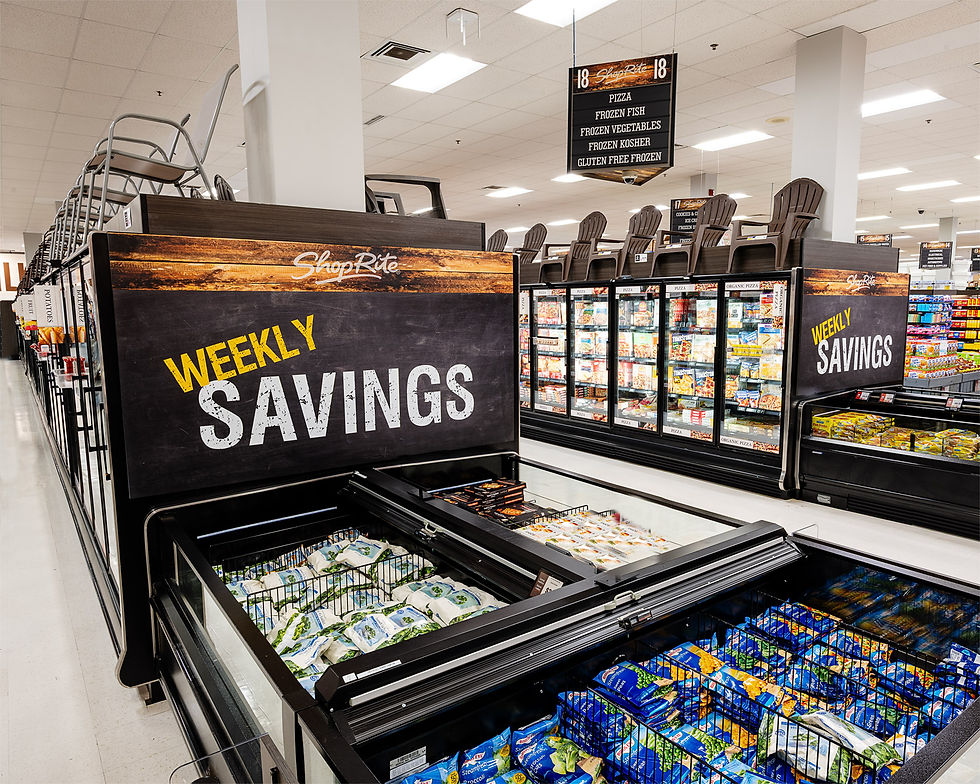
Wayfinding signage needs to work at three distances: overhead category banners visible from across the store, aisle blade signs readable at 20–30 feet, and shelf-level indicators for fine navigation. Consistent color-coding by department reinforces spatial memory across visits.


Floor graphics and traffic patterns can subtly slow shoppers in high-margin zones and direct flow around new or promotional sections. Chevron-style floor indicators and subtle aisle curvature naturally reduce walking speed.


The best layouts make first-time shoppers feel oriented quickly while rewarding regulars with a familiar rhythm — reducing friction, increasing browse time, and ultimately increasing the number of items in a shopping basket.


