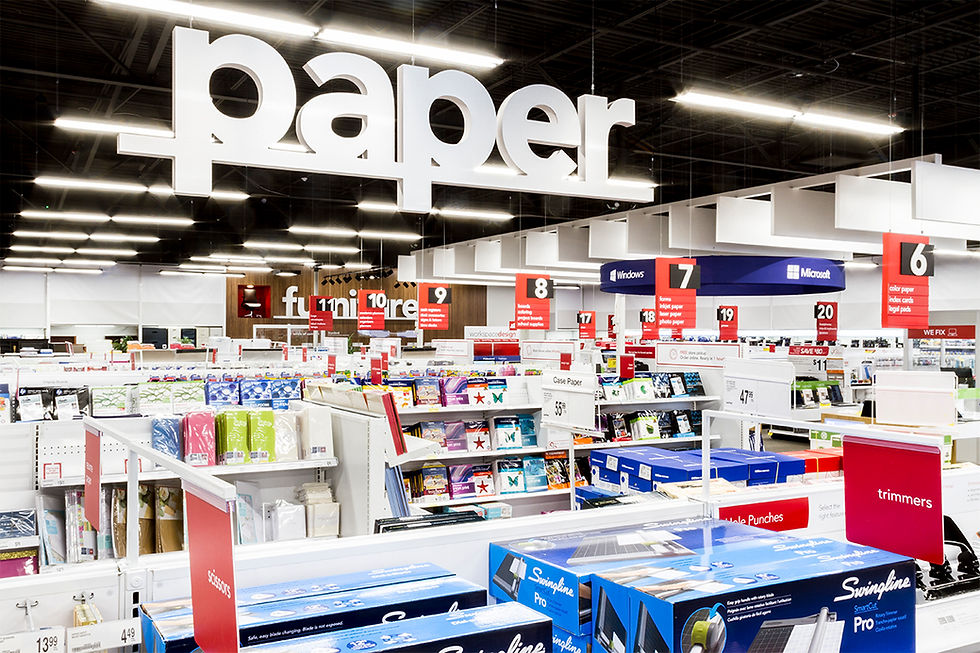
How Design Affects the Shopping Experience
Updated: Mar 3
The manner in which a retail environment is designed creates an emotional attachment with its customers. Studies have shown that as much as one-third of consumer decision-making is influenced by variables such as product packaging design.

It stands to reason that how an environment is “packaged” will trigger many feelings towards this end in a customer. A store's design can make someone feel not only psychologically and emotionally comfortable in a space, but also affect their trust in the retailer and even their attitudes towards how clean a store feels.

Good design will also affect how quickly and efficiently customers can shop, make them feel positive about the value they are getting for their dollar, and even enhance their self-esteem because of where they are shopping.

A store’s commitment to design begins with its trademarked icon. It continues with the colors and textures of its walls and floors, along with the décor on the walls.

Emotions towards design are connected to memory. Things like design consistency, relationships between shapes and colors, typography, and reactions to color combinations will all stick with a customer.

Playing word association with trademarks like Aldi, Apple, Staples, Kleenex, and BJs triggers immediate reactions from large segments of the population.
So what should a retailer be looking for in store design? In a word, Personality. Humans tend to have an emotional response to everything they see, animate or not.

Crucial to that emotional response is how they perceive a store’s personality. Design elements help define concepts such as trust, comfort, and value. These are some of the elements of design that determine a store’s personality:
Consistency of design throughout the environment. The tone is set by the retailer’s logo and store exterior. The feelings triggered by these elements must carry through in each department and aisle a customer encounters throughout the store.
Walking into an Apple store gives most people a good idea of what it feels like to own a Mac because the environment's look and feel are consistent with its product’s personality.

Apple Store Interior Efficient Floor Plan. What kind of a store are we talking about? The layout of a bookstore is dictated by factors different from those of a restaurant, and it differs from that of a supermarket or a small soap boutique. But what they all have in common is how well they are laid out in relation to the customer’s expectations and their resulting frame of mind when they enter. Are customers in each of these environments in a hurry to get in and out? Are they looking for a space to relax for a few minutes or a few hours? How a customer is led through each of these environments must be consistent with their expectations. A supermarket has many different environments and must be able to transition through various departments that satisfy changing customer expectations. Attractive, easy-to-find overhead structures and well-placed perimeter décor will not only move customers through these environments efficiently but also accurately predict what to expect once they are there.

ShopRite -- Cherry Hill, NJ - by Off The Wall Lighting, Textures, and Colors used in a store must also be consistent with a customer’s needs and expectations. These all help determine why they have chosen one retailer over another in the first place. A romantic dinner is best experienced in a dimly lit ambience, with very warm earth-toned colors. A long visit is expected here. McDonald’s wants to be known as a place where you can feed a family or yourself in a hurry. Bright lights and bright colors say this best. A drug store should feel immaculate and be brightly lit. Primary colors or clean pastels work better here and reinforce that retailer’s personality.

Gelson's - Calabasas, CA - by Off The Wall
The design teams and project managers at Off The Wall work closely with clients that already have well-established brands in the marketplace, as well as with clients revamping their brands into more effective associations in their customers' minds, and clients new to the scene and looking for the icons, colors, and uniquely designed elements to help shape their marketing personalities.